Climate Finance Playbook: Financing MENA’s Next Decade of Growth

MENA is entering a defining decade for climate and growth. Governments across the region have set ambitious climate commitments, yet MENA still faces an estimated USD 200 billion annual climate financing gap. At the same time, global climate finance now exceeds USD 1 trillion per year, even as public budgets tighten and traditional aid stagnates.
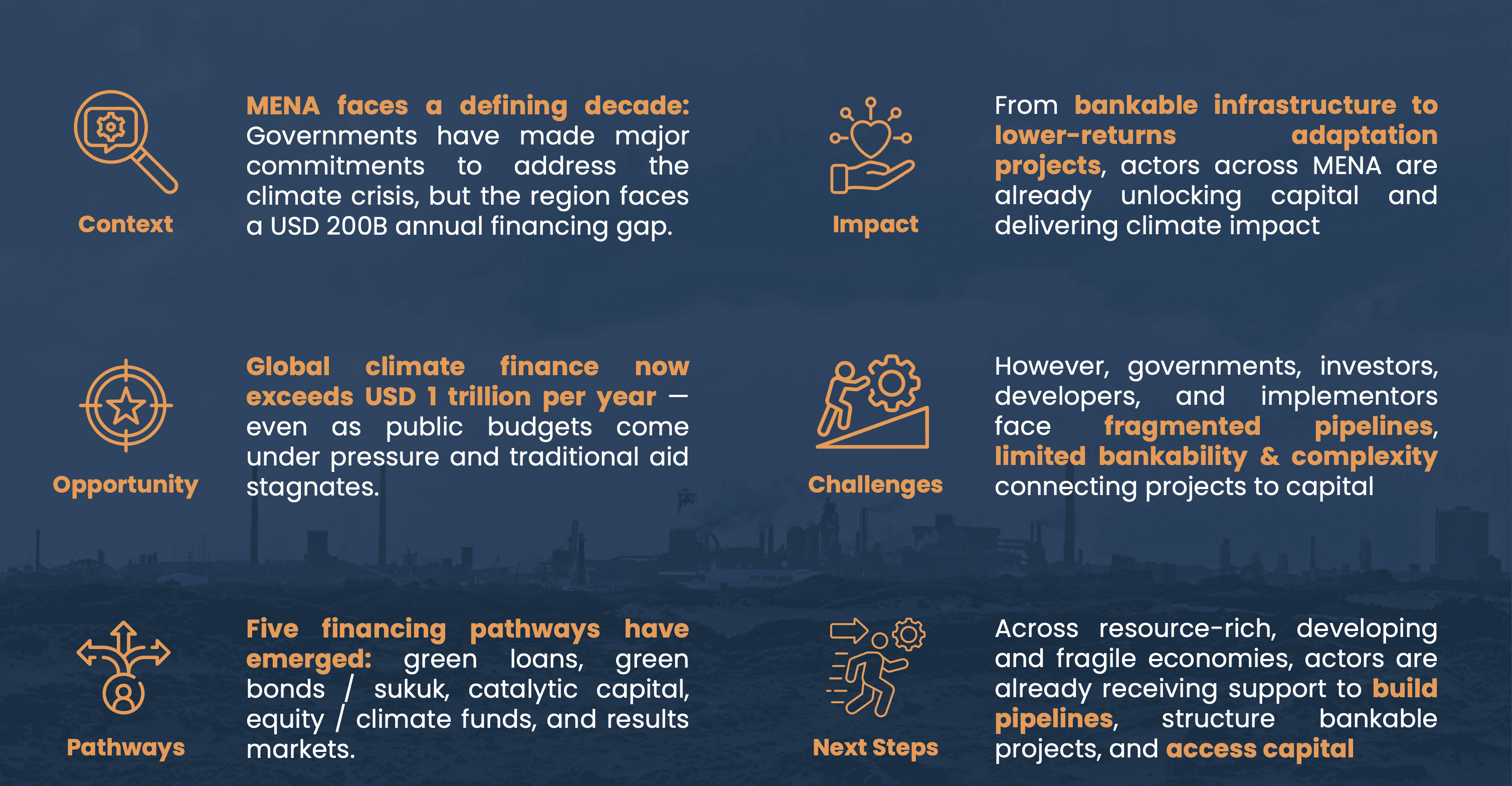
This new Dunecrest Foresight playbook is designed to help decision-makers move from ambition to investment. It provides a practical guide to selecting the right climate finance approach based on project type, expected returns, risk profile, and the scale of capital required.
Why this matters now
Climate impacts are already accelerating across the region, creating rising pressure on infrastructure, food systems, and water security. The playbook highlights major risk signals shaping MENA’s urgency, including heat stress, water scarcity, sea-level rise, and material economic exposure.
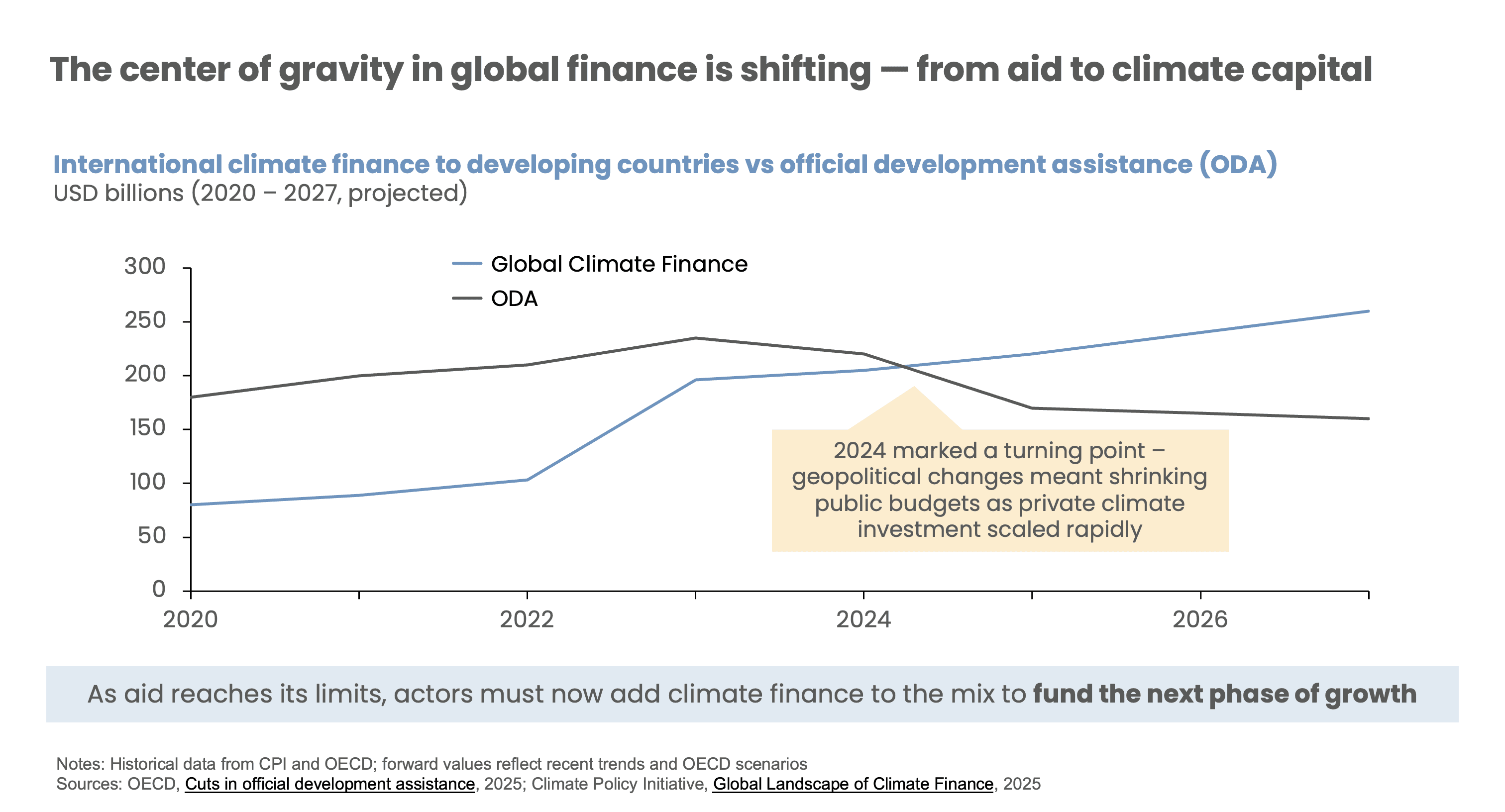
At the same time, the “center of gravity” in global financing is shifting from traditional aid toward climate capital. For MENA actors, the opportunity is not only to access larger pools of capital, but to do so in ways that strengthen resilience while enabling the next phase of sustainable growth.
The five climate finance pathways reshaping access to capital
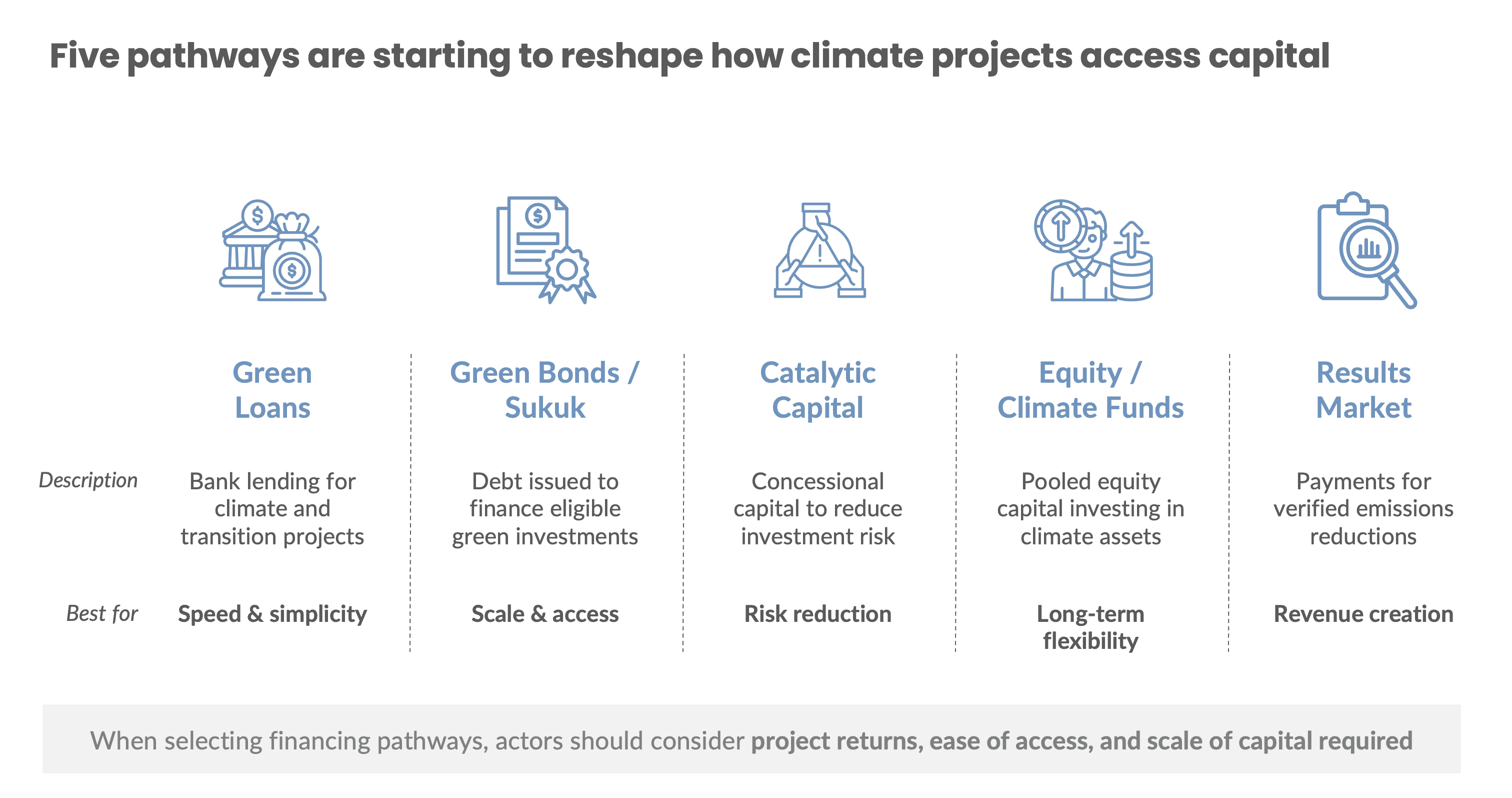
The playbook explains five financing pathways and when each one is most useful, from bankable infrastructure to lower-return adaptation priorities:
Green loans
Fast and straightforward bank lending for climate and transition projects, best suited to projects with predictable revenue streamsGreen bonds and sukuk
Large-scale debt issuance under recognized green or sustainability frameworks, unlocking deep pools of institutional capitalCatalytic capital
Concessional or risk-absorbing capital that reduces downside risk and mobilizes follow-on private investment in harder markets and projectsEquity and climate funds
Pooled long-term equity that supports project aggregation and scaling, aligning investors with long-horizon performanceResults markets
Outcome-based finance that turns verified climate impact into revenue, helping make previously “non-bankable” projects investable
Real examples from across MENA
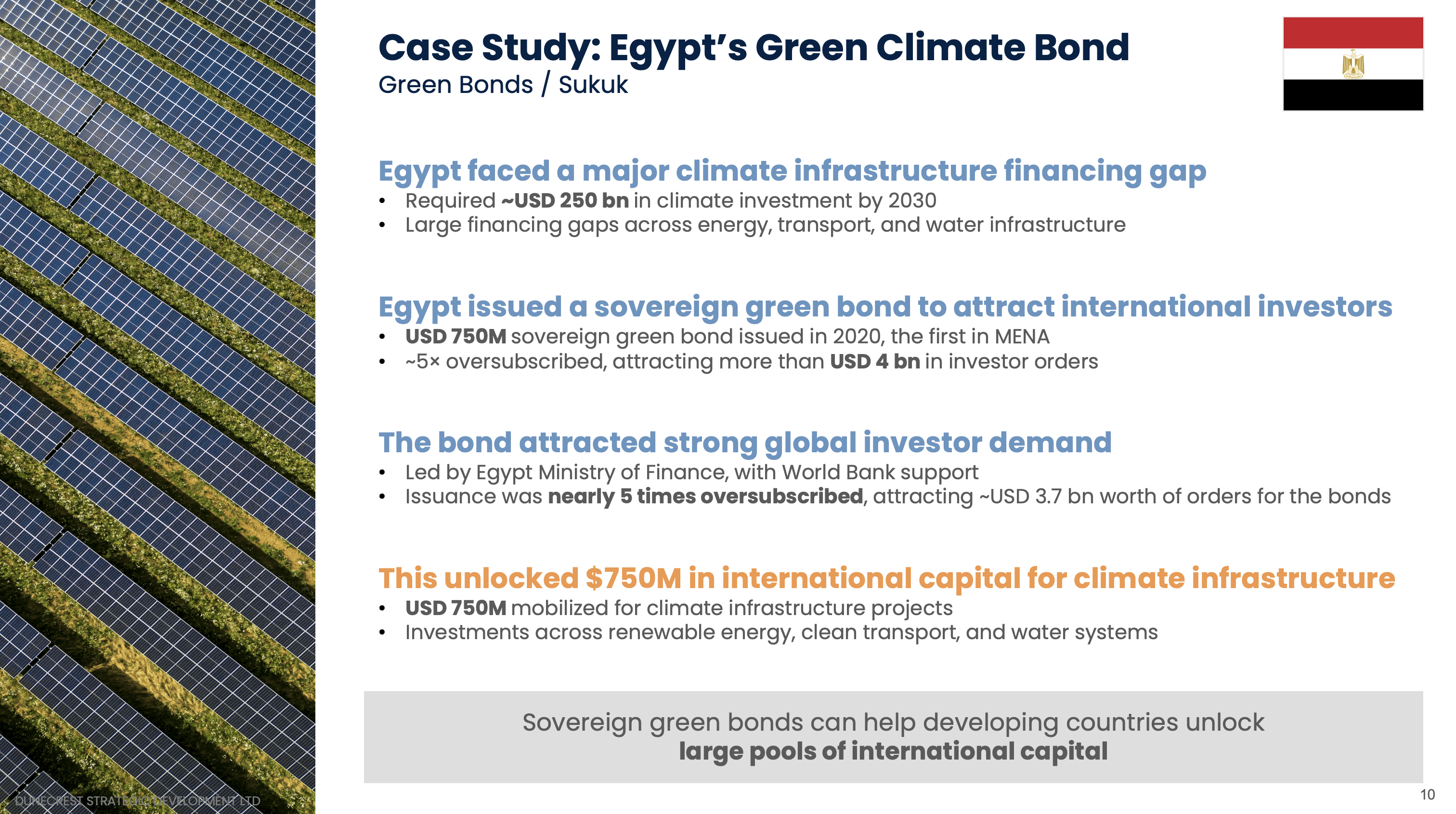
To make the pathways tangible, the playbook includes case studies that show how capital is already being mobilized across the region, such as:
Dubai Solar Park green loans (UAE)
Egypt’s sovereign green bond (first in MENA, 2020)
Noor Ouarzazate Solar Complex (Morocco, catalytic capital and risk-sharing)
ALTÉRRA climate platform (UAE, large-scale climate investment vehicle)
Global Carbon Council (Qatar, carbon credit standard supporting verified reductions)
The barrier is rarely ambition. It is the pathway.
Even with strong commitments and promising projects, many actors still struggle to move from “project ideas” to “investment-ready pipelines.” The playbook maps common challenges across governments, developers, implementers, and investors—especially fragmented pipelines, limited bankability, and the complexity of connecting projects to capital.
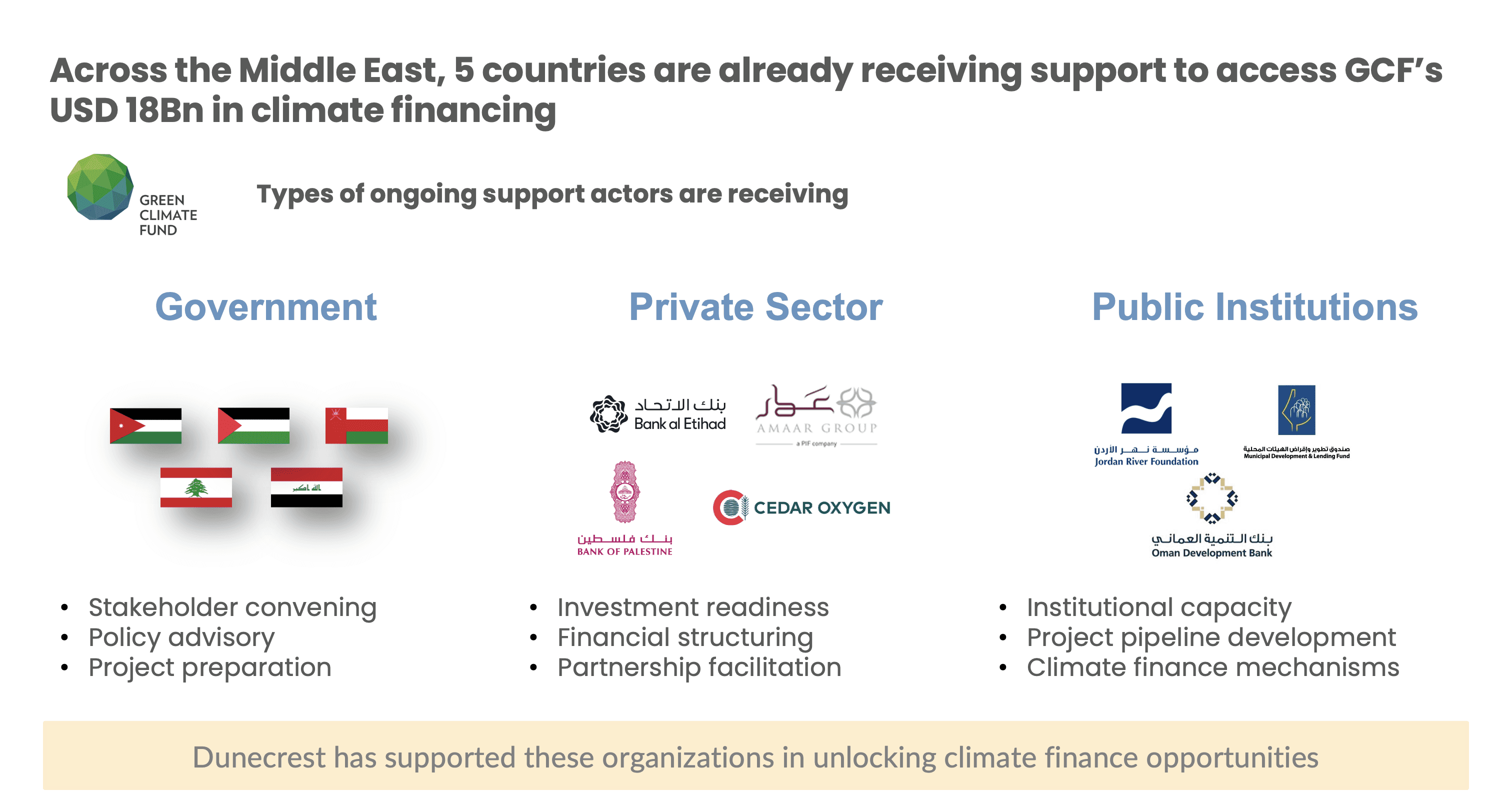
We also highlights how it supports partners along this journey, from stakeholder convening and policy advisory to project preparation, investment readiness, structuring, and partnership facilitation.
To explore the five pathways, selection guidance, and MENA case studies in full, download the playbook below.
Contributed by: Eddie Razak, Nass Terribas, Gideon Lim, Mira Machmouchi, Kendrick Hung

